Blog
Your water tank after the flood. Why clear water is not the same as clean water.
The water you can see at the tap is not the water worth worrying about. The problem sits upstairs or underground, in the container you never open.
“The water looks fine.”
That is the first answer from almost every homeowner we ask about cleaning the tank after a flood. It is a reasonable answer. If your test is what you can see in a glass, there is nothing to see.
In the days around the August habagat, PAGASA recorded 202 millimetres of rain in six hours at its Science Garden station in Quezon City, part of a 239-millimetre 24-hour total. NS Amoranto between G. Araneta Avenue and Sto. Domingo Avenue went 19 inches deep, knee deep, according to the MMDA list reported on August 18. Most cisterns and posos in QC sit below that line. Cleaning and disinfecting an overhead tank runs ₱1,500 to ₱4,000. The DOH is meanwhile under Code White Alert, monitoring a possible rise in leptospirosis cases from the widespread flooding.
Where the floodwater actually gets in
Not at the tap. The tap is always last in line.
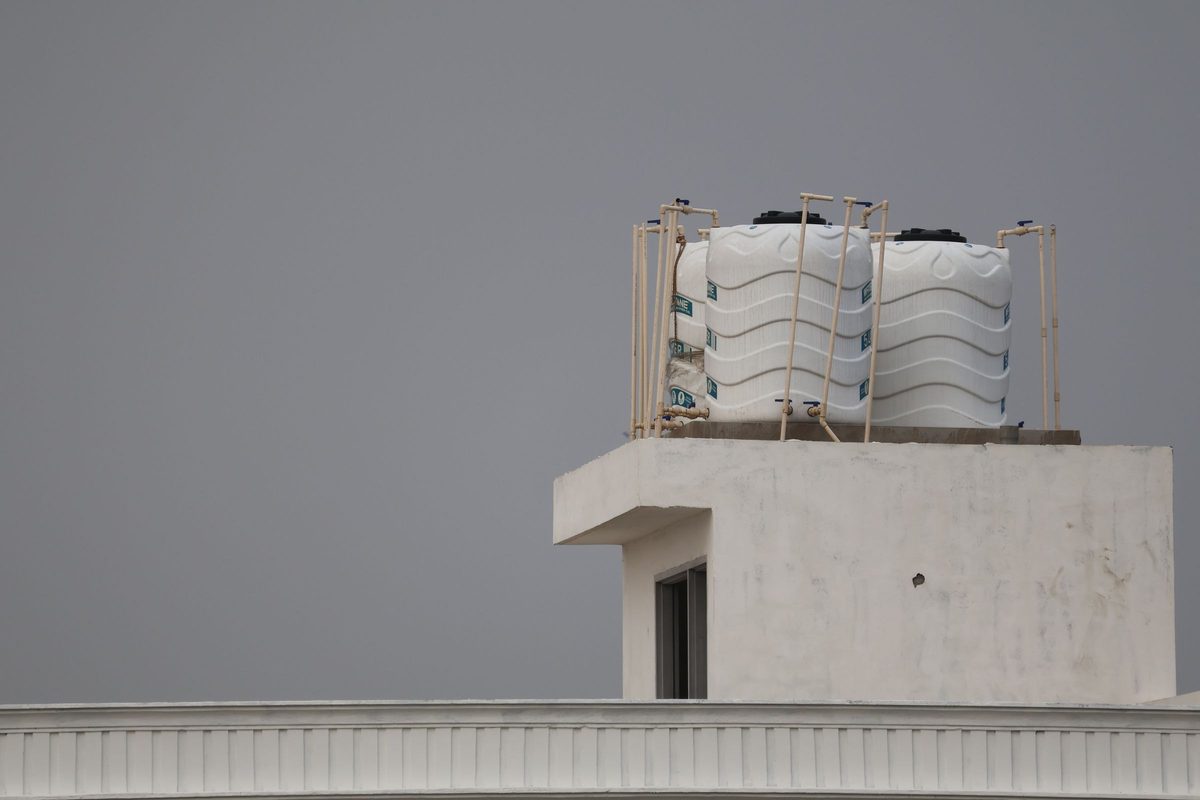
Every water store has three openings, and all of them are above the place you look. The lid is rarely sealed; on most houses it just rests in place, with a gap along the rim. The vent exists so the tank can breathe as the level drops, which means it is open to whatever is in the air. The overflow pipe is built to let water out, but it works just as well in reverse once the water outside is higher than the water inside.
On an overhead tank, the risk is splashback off a dirty roof and algae working in through an open lid. On an underground cistern, the mechanism is simpler and worse: once the flood reaches the manhole cover, floodwater runs straight down.
Overhead tanks get contaminated by droplet. Posos get flooded.
Why the water looks clear but isn’t safe
What makes water look cloudy is turbidity, meaning suspended solids: silt, sand, rust. Within six to twelve hours those settle to the bottom of the tank. The water above them, which is what your pump sends to the tap, goes clear again.
Bacteria do not settle that way. Leptospira and sewer coliforms are microscopic and stay dispersed through the whole volume, with no colour and no taste at concentrations high enough to make you sick.
So waiting two days is not a fix. It is the one step that improves how the water looks without touching the problem.
What you can do: cleaning a water tank after a flood
Do it in this order.
First, shut off the pump and stop using the water for drinking and cooking. Bottled or boiled while you work through the rest.
Second, empty the tank through the drain valve at the bottom, not by using the water around the house. The point is to get the sediment out, not to run it through your taps.
Third, scrub the walls and floor with clean water and a brush. Skip dish soap; it is hard to rinse out completely and leaves a film that bacteria hold onto.
Fourth, disinfect, then let it sit before draining and refilling.
Fifth, seal the three openings: a new gasket on the lid, a screen on the vent, and a flap or non-return fitting on the overflow. This is the part most people skip, which is why they end up cleaning again after every flood.
Why the water reaches your house in the first place is a separate mechanism, and we break it down in our guide to preventing blocked drainage and flooding.
When you need a plumber
There are three lines you should not cross alone.
The first is confined space. Climbing into an underground cistern without ventilation and without someone up top is one of the ways people die doing this work. Do not go down into your poso.
The second is a submerged pump. If the flood reached it, there is silt in the windings, and running it before it is checked is how temporary damage becomes permanent. We cover the sequencing in our guide to what to do in the days after a flood.
The third is dosing. Too much chlorine attacks the gasket; too little fails to kill anything and hands you false confidence. That judgment is what you are paying a plumber for, not the scrubbing.
What to expect on price
| Job | Indicative range | What drives the price |
|---|---|---|
| Overhead tank cleaning and disinfection | ₱1,500–₱4,000 per tank | Capacity, roof access, sediment volume |
| Underground cistern or poso: drain, scrub, chlorinate | ₱3,500–₱9,000 | Depth, volume, confined-space entry |
| Water pump check after submersion | ₱1,200–₱5,000 per unit | Motor size, silt intrusion, rewind or replace |
| Sealing lid, vent and overflow | ₱800–₱3,000 | Number of openings, material, access |
Indicative Metro Manila ranges as of August 2026, based on KuyaYos booking data. Actual quotes depend on site assessment.
Your plumber confirms the exact price on-site before any work begins.
You shouldn’t have to guess whether your water is safe
That is the real problem with tank cleaning: it is easy to do badly, and the water comes out clear either way.
The plumber we send carries their own dosing kit and works to a confined-space protocol. One booking, and you get the quote before anything starts, inside our published price range.
Common questions
Do I need to clean my water tank if the flood didn’t reach my house?
It depends on the type. An underground cistern can flood even when your floors stayed dry, because it sits below ground level. An overhead tank is better protected, but if you lost pressure or got air in the line during the rain, check the lid anyway.
Is boiling the water enough instead of cleaning the tank?
Enough for drinking, not for anything else. Boiling kills bacteria in the water you drink, but you are still bathing, washing dishes and brushing your teeth from the same tank. It is a stopgap while you wait for a clean, not a replacement for one.
How often should a water tank be cleaned in Metro Manila?
Every six months is the usual interval for a properly sealed overhead tank. For houses that have flooded, the trigger is not the calendar but the event: clean after any flood that reaches the manhole or the lid.
Is chlorine bleach safe for cleaning a tank?
Safe at the right dose, and only plain unscented bleach, not scented or colour-safe formulations. The dose is the whole problem. Too much attacks the gasket and leaves a taste; too little fails to kill bacteria. Have it calculated against your tank’s actual capacity.
Did the flood reach your poso or your tank lid?
Book a tank cleaning and we will send an ID-verified plumber, usually within the same business day. The three openings get checked before the clean, so you are not repeating this after the next storm.
Check the tank lid while it is still dry.