Blog
Aircon maintenance sa tag-ulan: bakit lumalala ang unit mo pag habagat (at paano pigilan).
Bakit lumalala ang aircon mo pag habagat? 5 dahilan na hindi mo ine-expect, at paano mo maiiwasan ang mamahaling repair.
Your aircon works hardest during the months you think it should be resting. Most people assume rainy season means cooler weather and lower electricity bills, but the opposite is true. Humidity spikes to 80 to 90 percent during habagat, and your unit has to work overtime just to pull moisture out of the air. That is how a ₱25,000 split-type inverter turns into a ₱25,000 paperweight in one wet season.
Most homes and small businesses in Quezon City run their aircon daily through the rainy season, and most only call someone once the unit has already stopped cooling. The average aircon repair in Metro Manila costs between ₱3,000 and ₱8,000. A basic cleaning and maintenance visit costs ₱500 to ₱1,500. The math is not complicated.
Bakit nasisira ang aircon pag tag-ulan? 5 dahilan na hindi mo ine-expect
Rainy season creates a specific set of conditions that accelerate wear on your unit. Here are the five most common ones we see in the field.
1. Clogged drain lines
Every aircon unit produces condensation. That water drains through a small plastic line at the back of the indoor unit. During habagat, the volume of condensation increases because humidity is higher. If that drain line is partially blocked by algae, dust, or debris, the water backs up and leaks inside your room. You wake up to a puddle on the floor and assume the unit is broken. It is not. The line just needs flushing.
DIY check: Look at where the drain hose exits your wall outside. If you see green buildup or the water is not dripping during operation, the line is partially blocked.
Call a technician if: Water is leaking from the indoor unit onto your wall or floor. That means the blockage is far enough inside the line that flushing from the outside will not clear it.
2. Mold in the indoor unit
High humidity plus a dark, enclosed space equals mold. The evaporator coil and blower fan inside your unit are perfect environments for it. Once mold colonizes the blower fan, every time the unit runs it pushes mold spores directly into your room. That musty smell when you turn on the aircon is not just unpleasant. It is a health issue, especially for kids and anyone with respiratory problems.
DIY check: Open the front panel and pull out the mesh filter. If you see dark spots on the filter or on the white plastic housing behind it, mold is already growing. Cleaning the filter alone will not fix this.
Call a technician if: You see black or dark green patches on the blower fan or evaporator coil. This requires chemical cleaning with proper equipment and protective gear.
3. Overworked compressor
When humidity is high, your aircon cycles longer and harder to reach the temperature you set. If your unit is undersized for the room, or if the refrigerant is low, the compressor runs continuously without ever reaching the target temperature. That continuous running increases your electricity bill and shortens the compressor’s lifespan. Compressor replacement alone typically costs ₱5,000 to ₱12,000 depending on the unit.
DIY check: Set your aircon to 25°C. If after 30 minutes the room still does not feel cool and the outdoor unit never stops running, something is wrong.
Call a technician if: The unit runs nonstop, makes clicking or buzzing sounds from the outdoor unit, or trips your circuit breaker. These are compressor stress signals.
4. Corroded outdoor unit
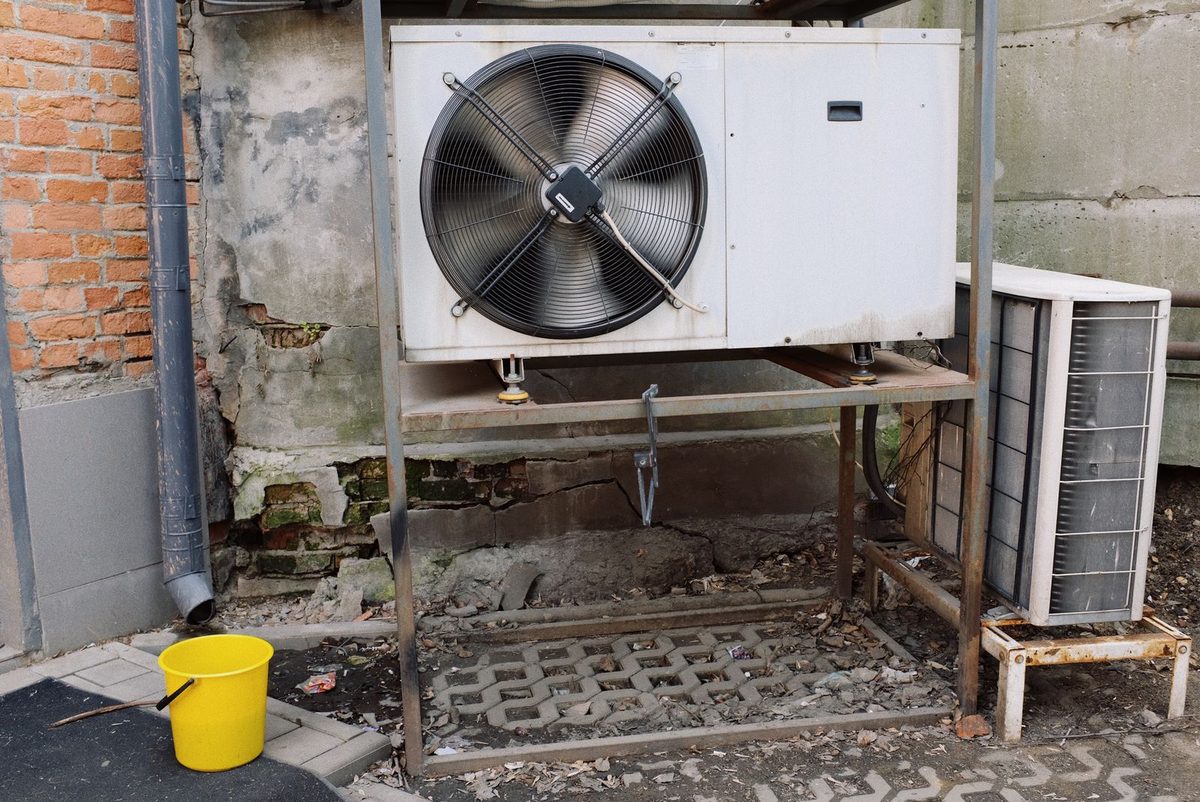
The outdoor condenser sits in the rain all season. If the protective coating on the aluminum fins has worn off, or if the unit is positioned where rainwater pools around its base, corrosion accelerates. Corroded fins reduce heat exchange efficiency, which means the unit works harder and costs more to run. In low-lying, flood-prone parts of Quezon City, this happens faster than most people expect.
DIY check: Look at the aluminum fins on the back of your outdoor unit. If they are visibly brown, bent flat, or crumbling when touched, the damage is already significant.
Call a technician if: More than 30% of the fins are damaged or corroded. At that point cleaning will not recover the lost efficiency, and the coil may need replacement.
5. Electrical issues from power fluctuations
Brownouts are more frequent during habagat. Every time power cuts and returns, the voltage spike can damage your aircon’s control board. Inverter units are especially vulnerable because their electronic components are more sensitive than older fixed-speed models. A fried control board costs ₱3,000 to ₱6,000 to replace and usually takes one to two weeks to source if the brand is not common. Power surges do not stop at your aircon, either. If your lights flicker or your breaker trips during storms, read our guide to electrical warning signs sa tag-ulan.
DIY fix: Install an AVR (Automatic Voltage Regulator) on the circuit that feeds your aircon. A decent one costs ₱1,500 to ₱3,000. It is cheaper than one fried board.
Call a technician if: Your aircon turns on but does not cool, shows error codes on the display, or the indoor unit beeps repeatedly after a brownout. These are signs the board took a hit.
Paano protektahan ang aircon mo this habagat season
Prevention is not complicated. These four habits cost almost nothing and save you thousands in emergency repairs.
Clean your filters every two weeks. Pull them out, rinse with water, and let them dry completely before reinstalling. It takes five minutes.
Check the drain line monthly. Go outside and confirm water is dripping from the drain hose while the unit is running. If it stops dripping, call someone before it leaks inside.
Schedule a professional cleaning before the rains peak. A chemical cleaning of the evaporator coil and blower fan once before habagat season prevents mold buildup and keeps efficiency high.
Install an AVR if you do not have one. One brownout surge can cost more than the AVR itself. Protect the investment.
Kailangan mo ba ng aircon technician?
If your unit is leaking, smells musty, runs without ever cooling, or took a hit after a brownout, it is worth having someone look before the next storm. A vetted aircon technician can clean the coil, flush the drain line, check your refrigerant, and test the control board in a single visit. You can read more about what a KuyaYos aircon technician covers before you book.
Need a clean, not a repair? Book aircon cleaning.
Aircon problems are cheapest to fix while they are still small. A drain line flush is a routine visit. A flooded room, a moldy coil, or a dead compressor is not. The signs above are your unit telling you which one you are heading toward.
May aircon problem ka ngayong tag-ulan?
Book an aircon technician through the form, or message us if your unit is leaking or has already stopped cooling. We’ll match you with a vetted pro the same business day.
Tag-ulan doesn’t wait. Neither should your aircon.